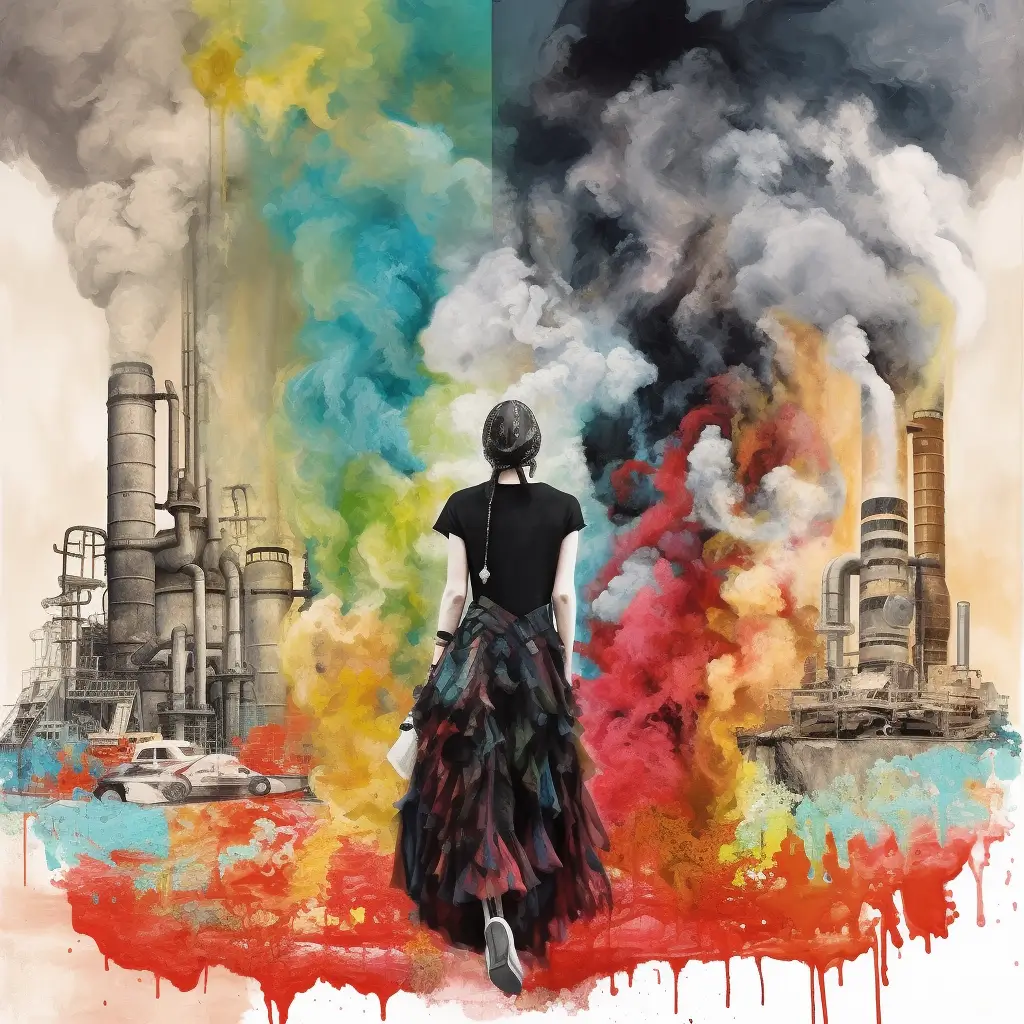
In the world we live in, synthetic and mass-produced garments have become incredibly pervasive, dominating our wardrobes and the fashion industry as a whole. These garments offer convenience and affordability, but there's a hidden price we pay for their ubiquity – the health of our planet and the sustainability of our fashion choices.
Fabrics like nylon and polyester, which make up a significant 60 percent of the fiber market, pose significant environmental challenges. Non-biodegradable and often discarded in landfills and waterways, these synthetic materials contribute to the alarming issue of microfiber pollution.
Additionally, the fabric and dyeing processes involved in their production contribute to water pollution, endangering ecosystems and introducing cancer-causing chemicals. Moreover, the manufacturing of synthetic materials releases harmful pollutants into the air, posing risks to respiratory health.
On the other hand, there is a more sustainable and natural approach to fashion that deserves our attention. Handcrafted clothing made from organic materials like hemp, bamboo, and vegan leather not only reduce energy and resource consumption but also offer remarkable eco-friendliness. Organically grown materials emit fewer toxic chemicals during production, as they require minimal chemical treatments. Furthermore, these renewable materials are biodegradable, helping to combat the growing problem of textile waste in landfills.